Cisco FTD
SAMURAI Networks parses Cisco FTD devices directly from their running configuration (routing, interfaces, access policy, NAT and objects); no FMC is required.
Open a device from the Devices page or the sidebar to reach these tabs.
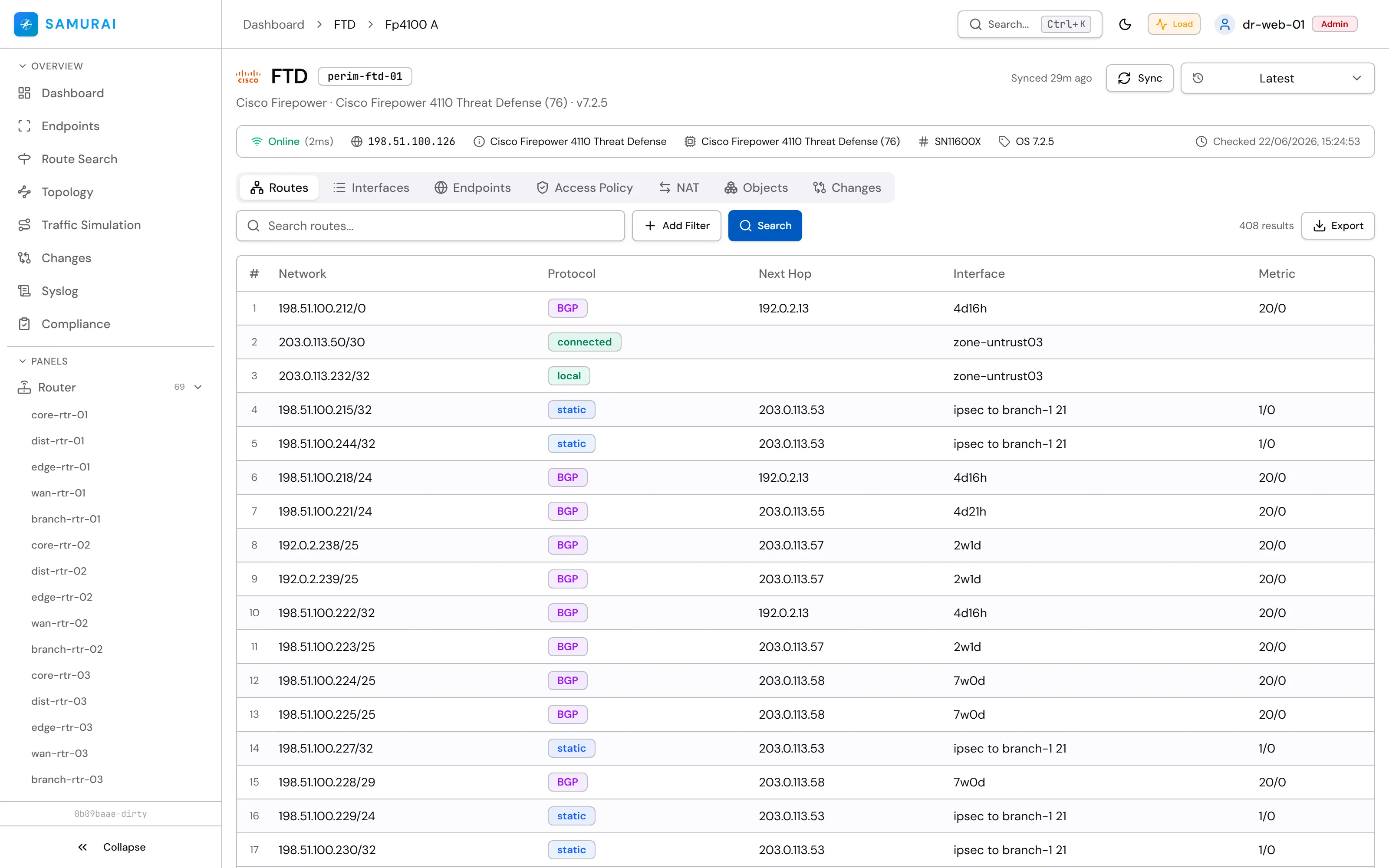
Routes
The routing table, normalized across vendors: destination, next hop, egress interface, metric and flags, split per VRF where the platform has them. Searchable and exportable; cross-vendor lookups are available from Route Search.
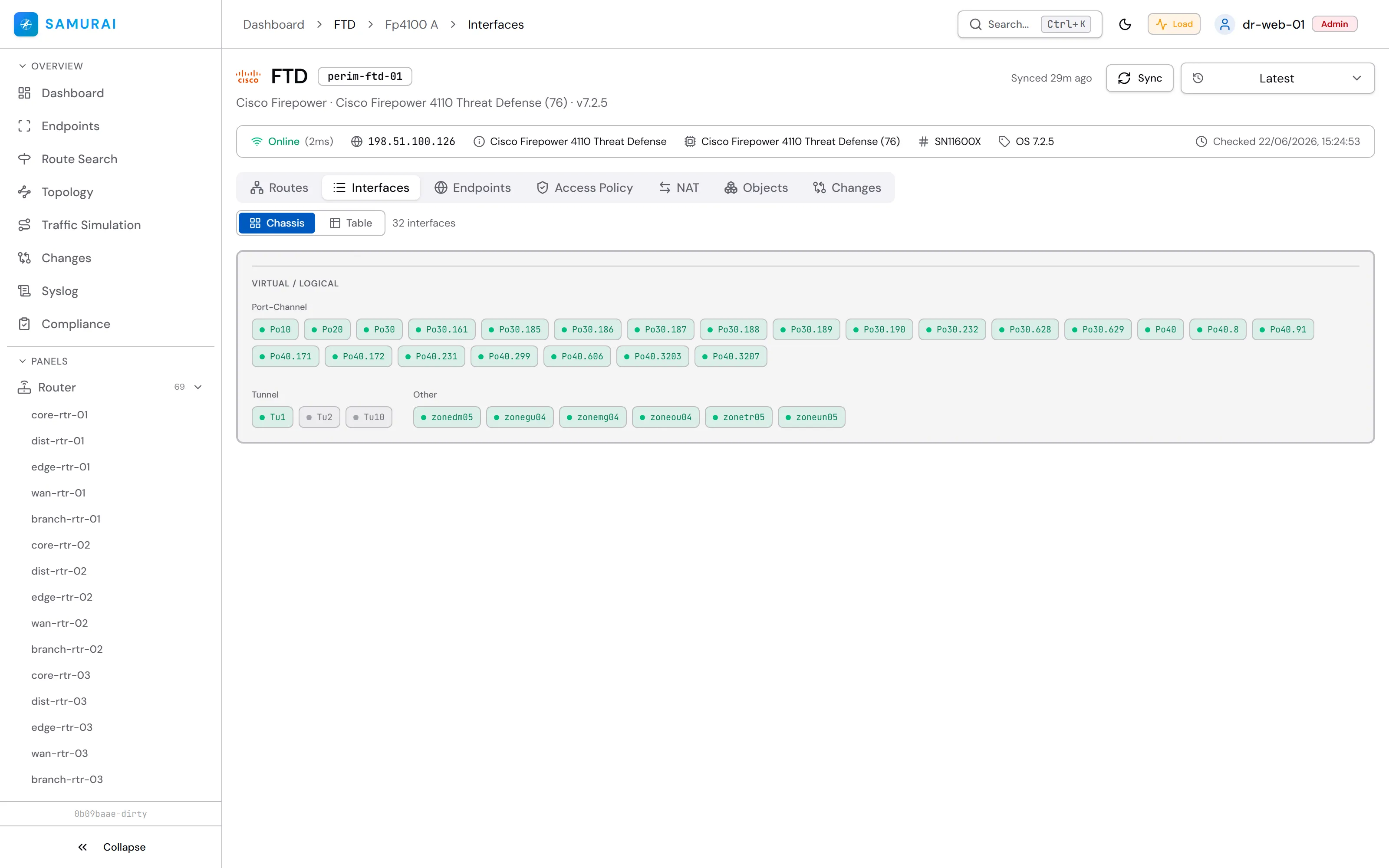
Interfaces
Physical and logical interfaces with status, addressing and description.
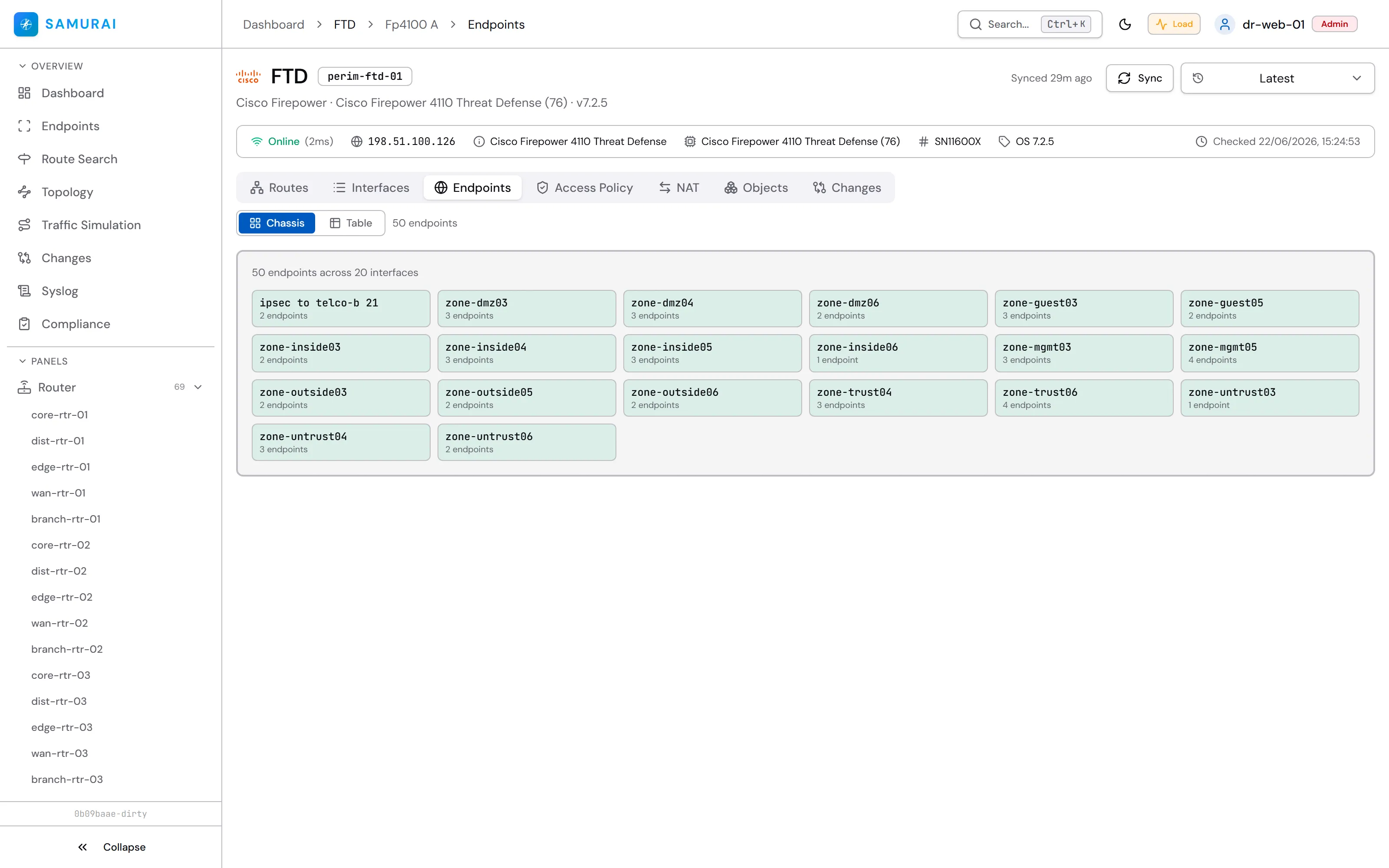
Endpoints
Hosts learned on this device (by MAC, ARP, DHCP snooping, CDP/LLDP and 802.1X) enriched with vendor (OUI) and identity.
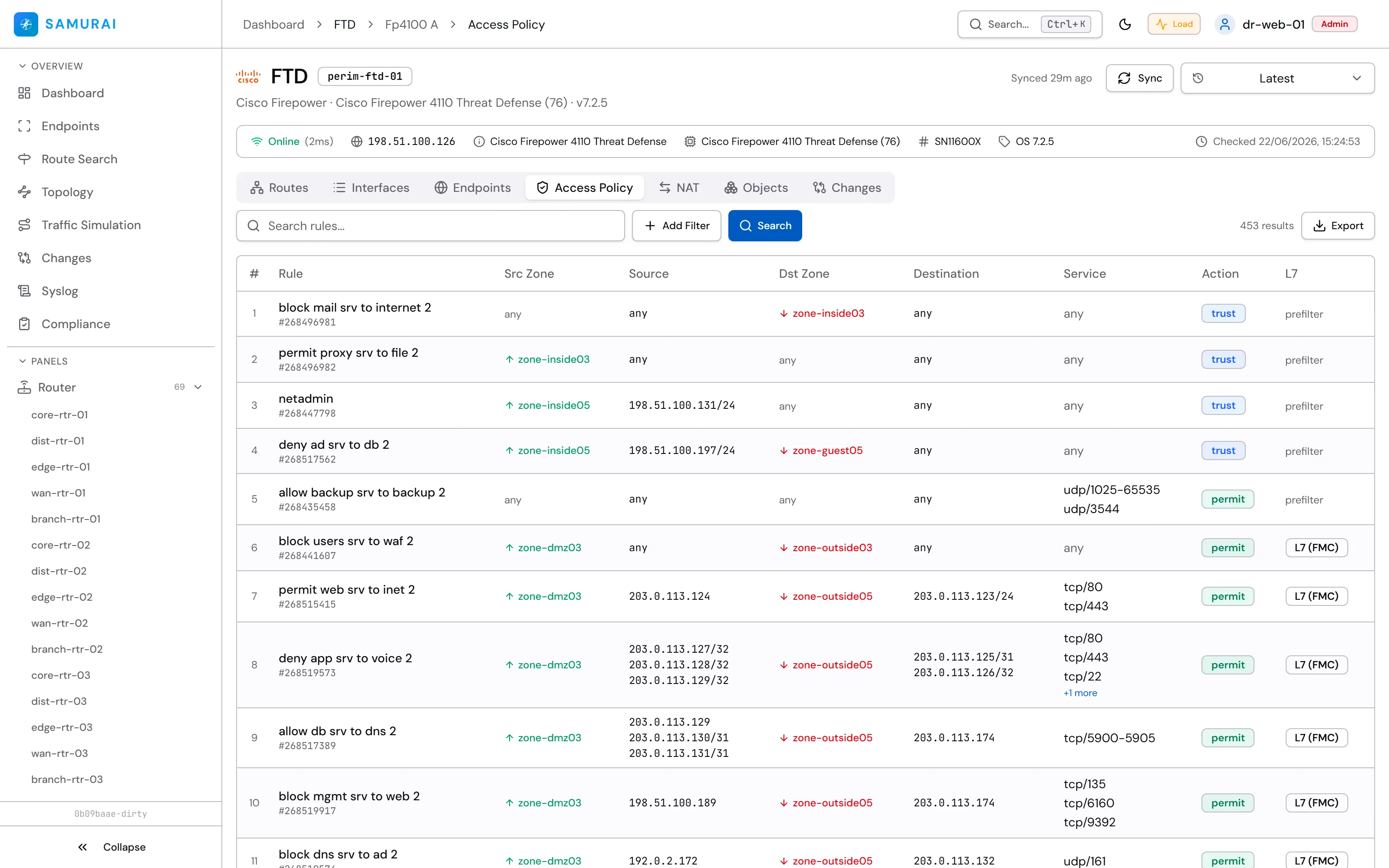
Access Policy
The access-control policy parsed from configuration.
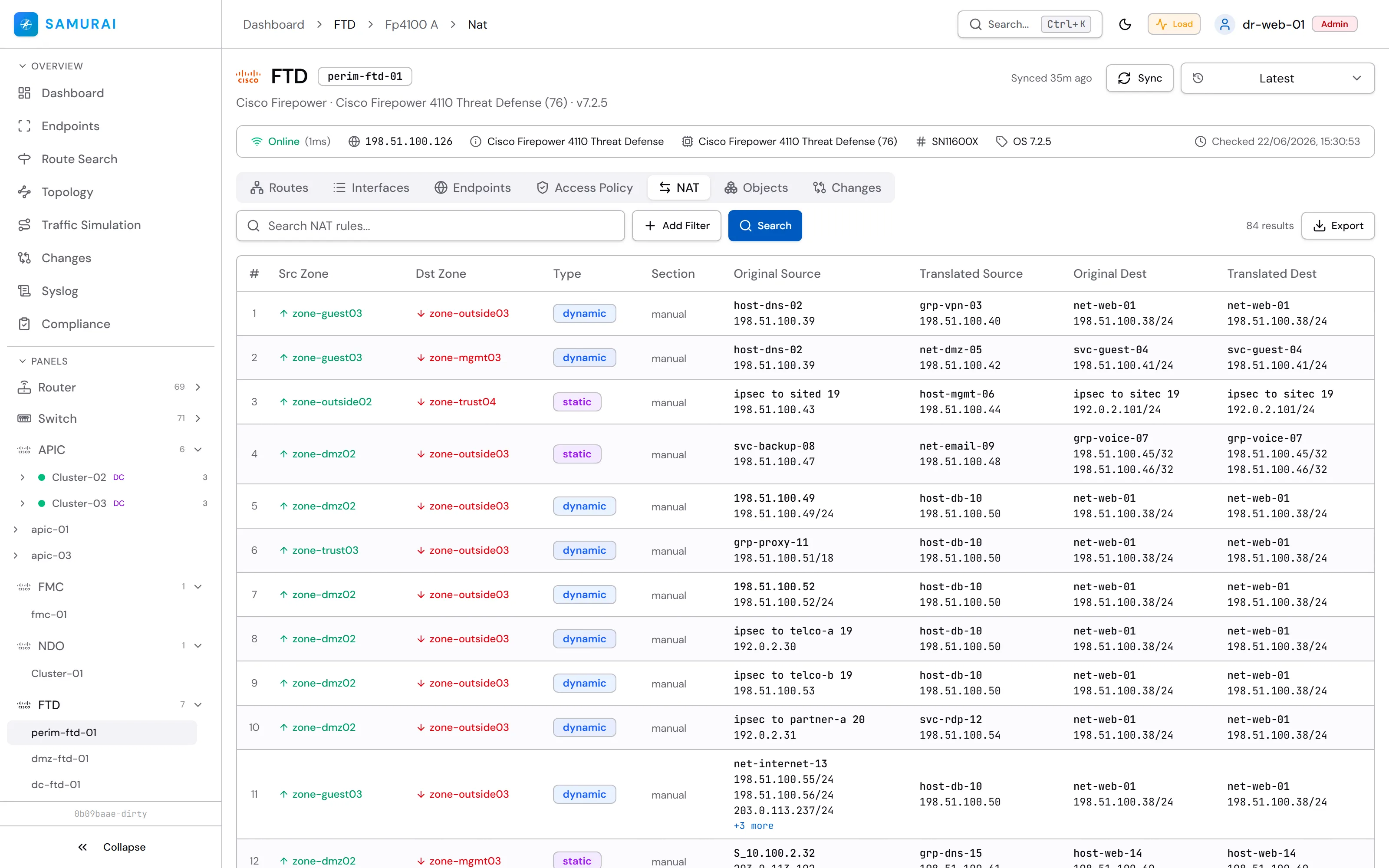
NAT
NAT rules with the original and translated packet side by side: zones, addresses, and dynamic or static translations down to the egress interface. A row expands to the full original-versus-translated breakdown.
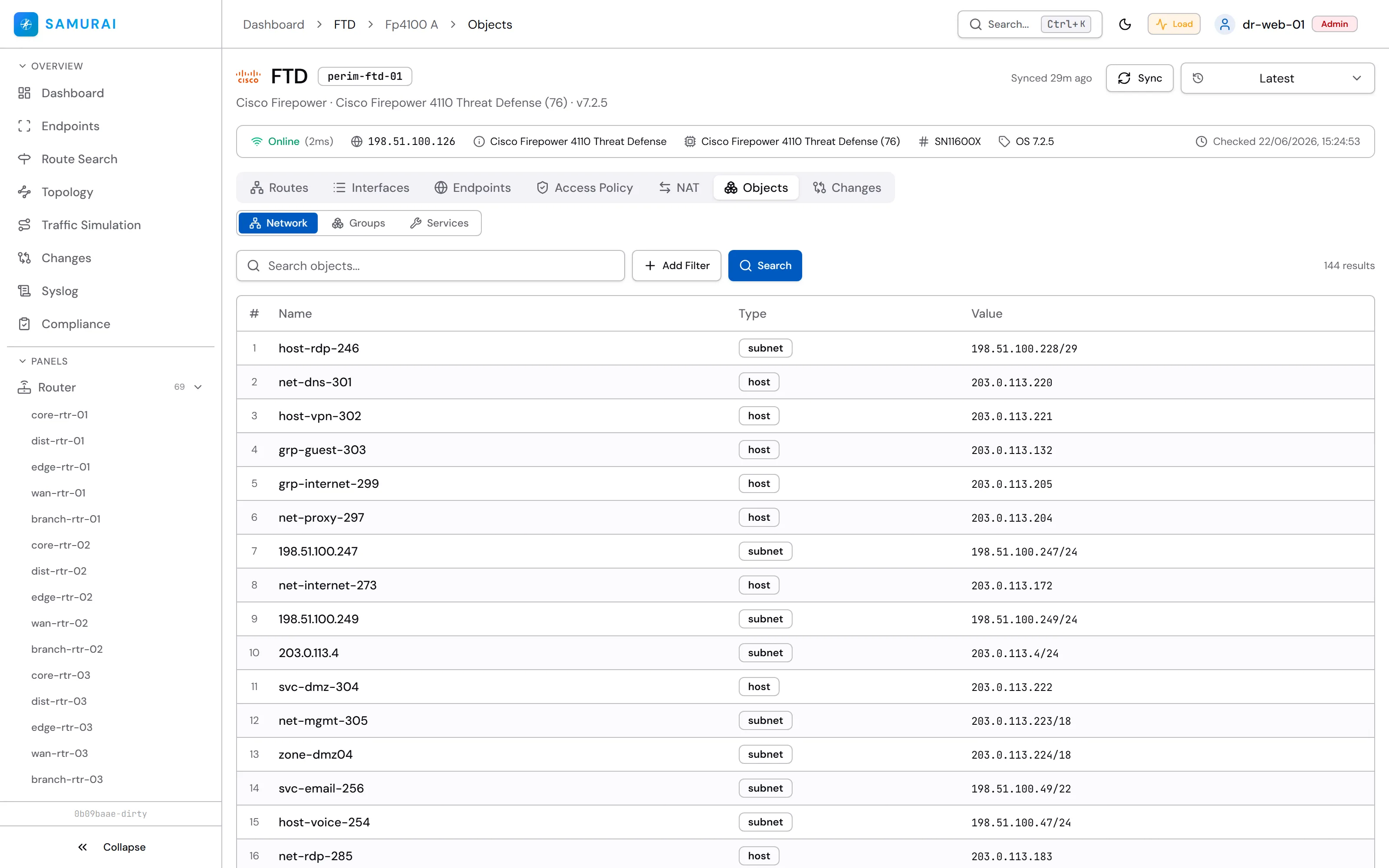
Objects
Network, host and service objects, resolved to their values.
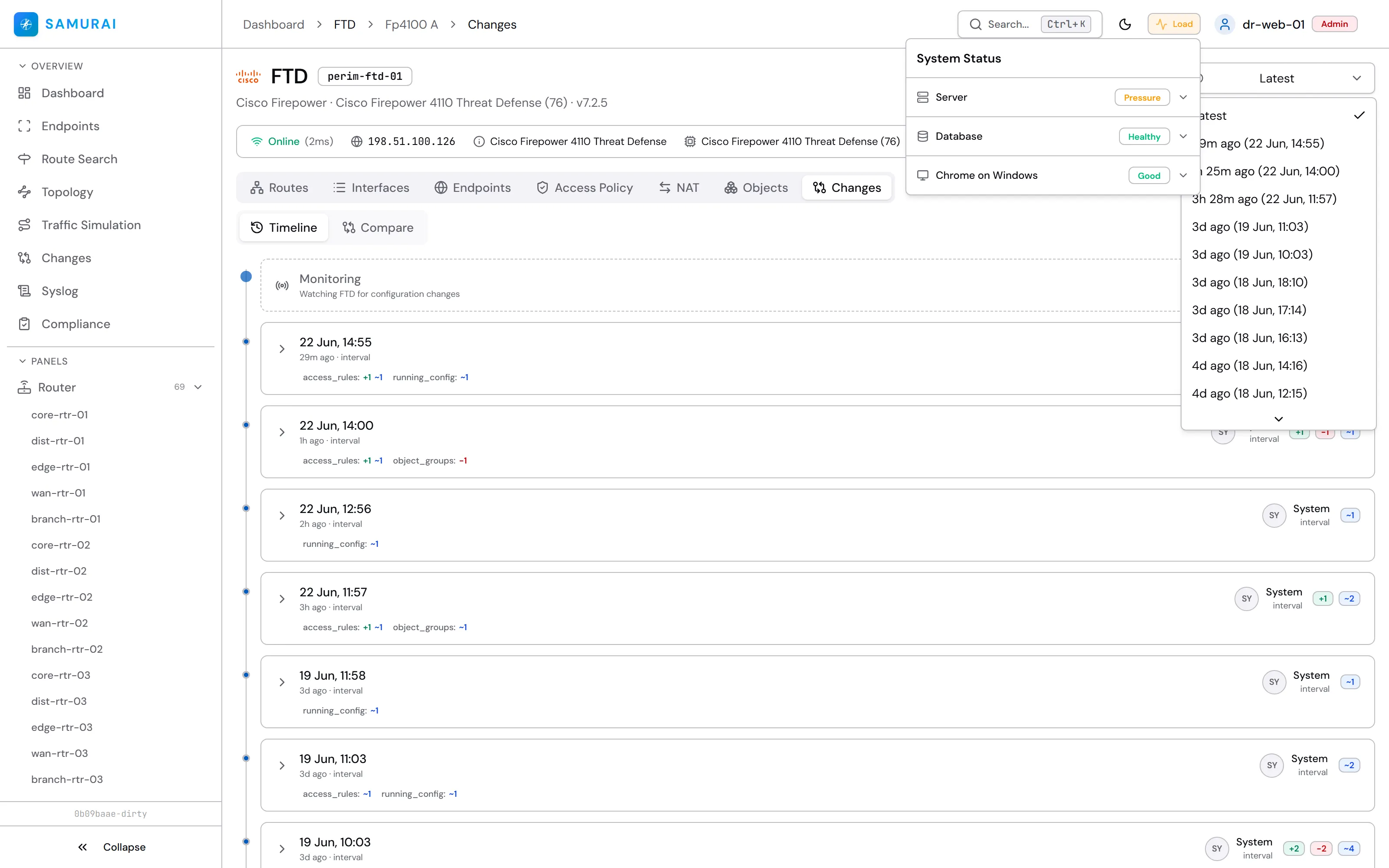
Changes
Configuration changes for this device, grouped by sync on a timeline. Added, removed and reordered rules render as structured cards (source and destination zones, addresses, applications and services laid out like the rule itself), each attributed to the responsible admin and access method where audit data is available. Compare diffs any two snapshots, and Analyze with AI explains a change in place when an AI provider is configured.